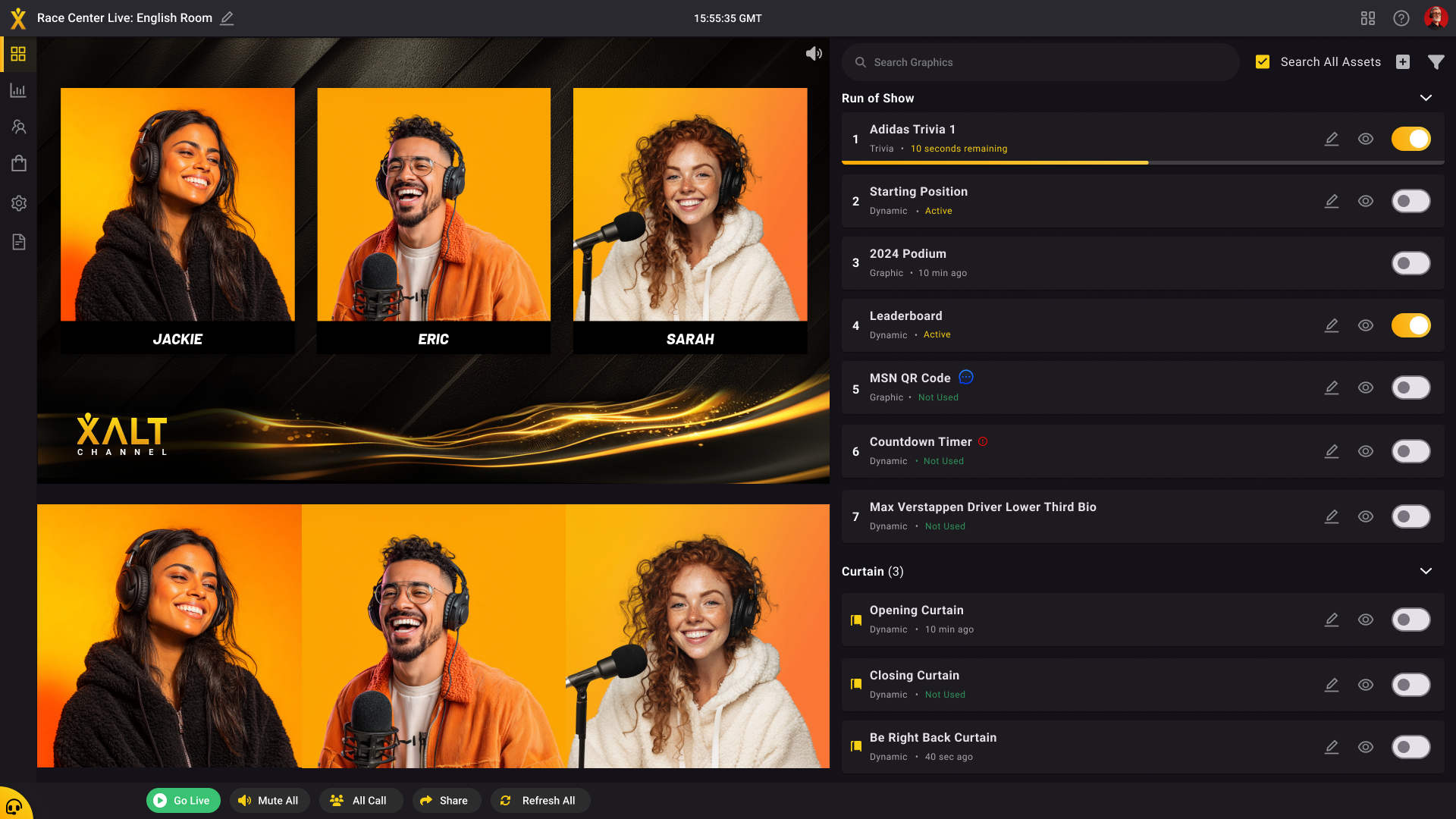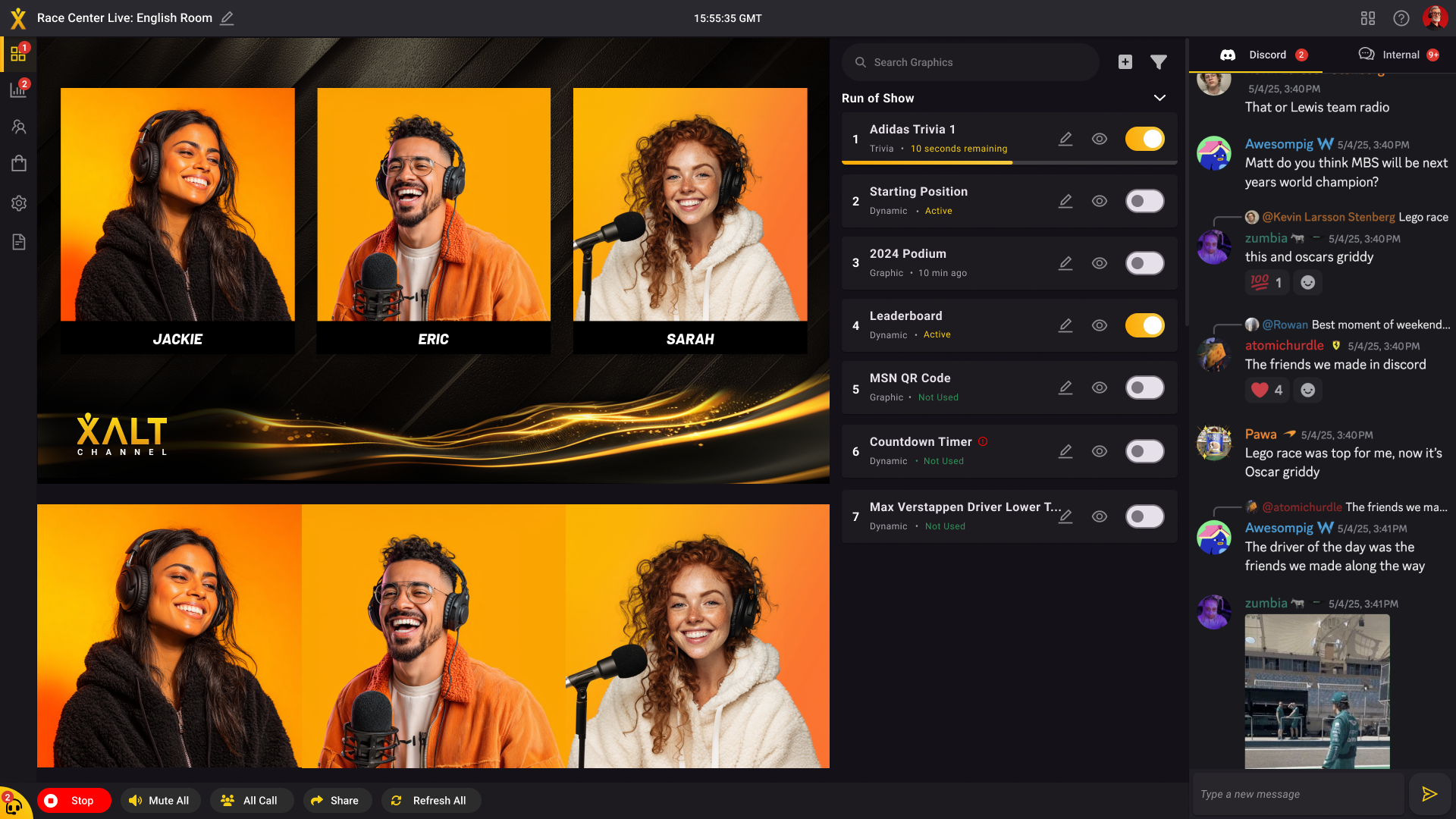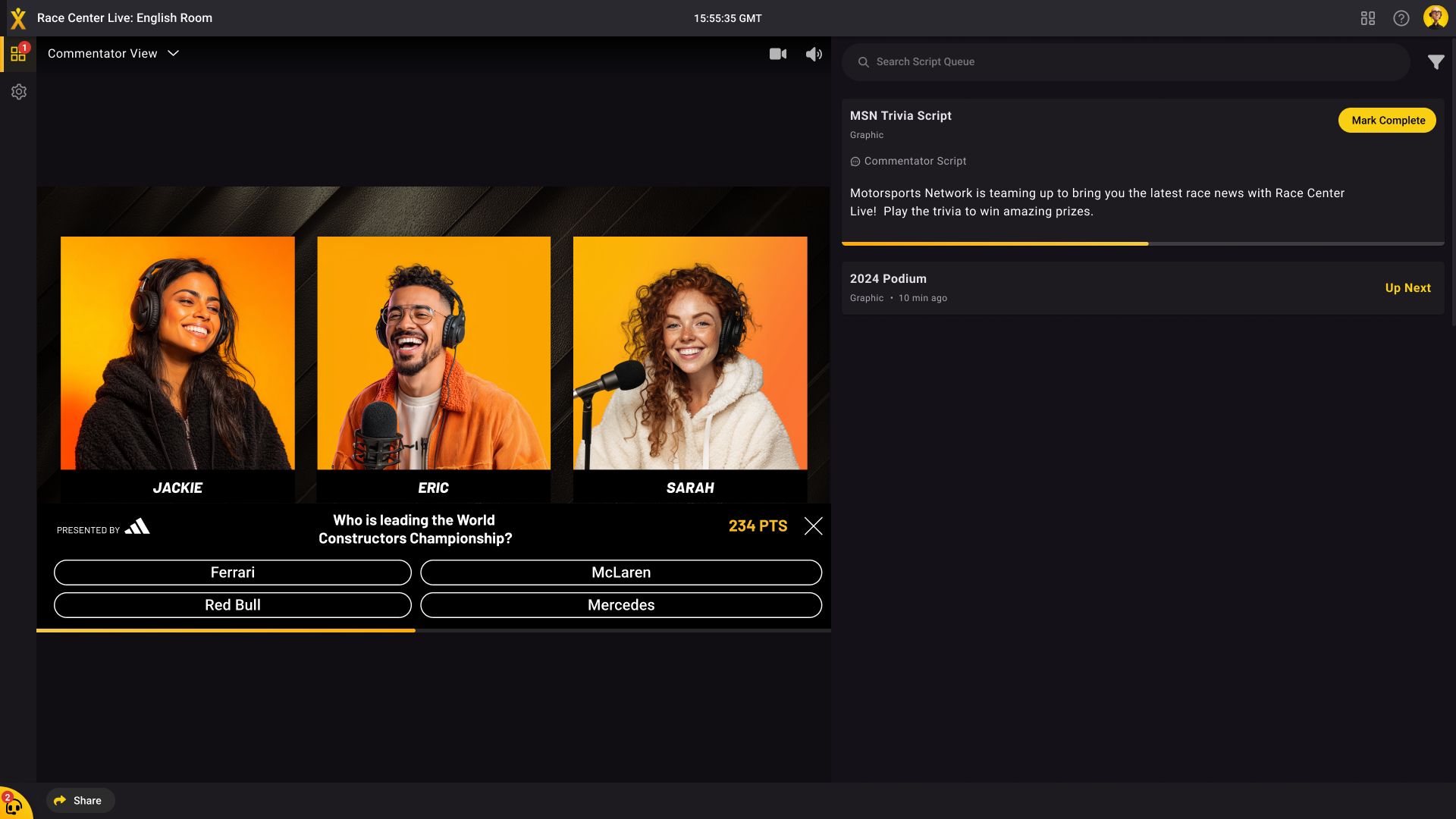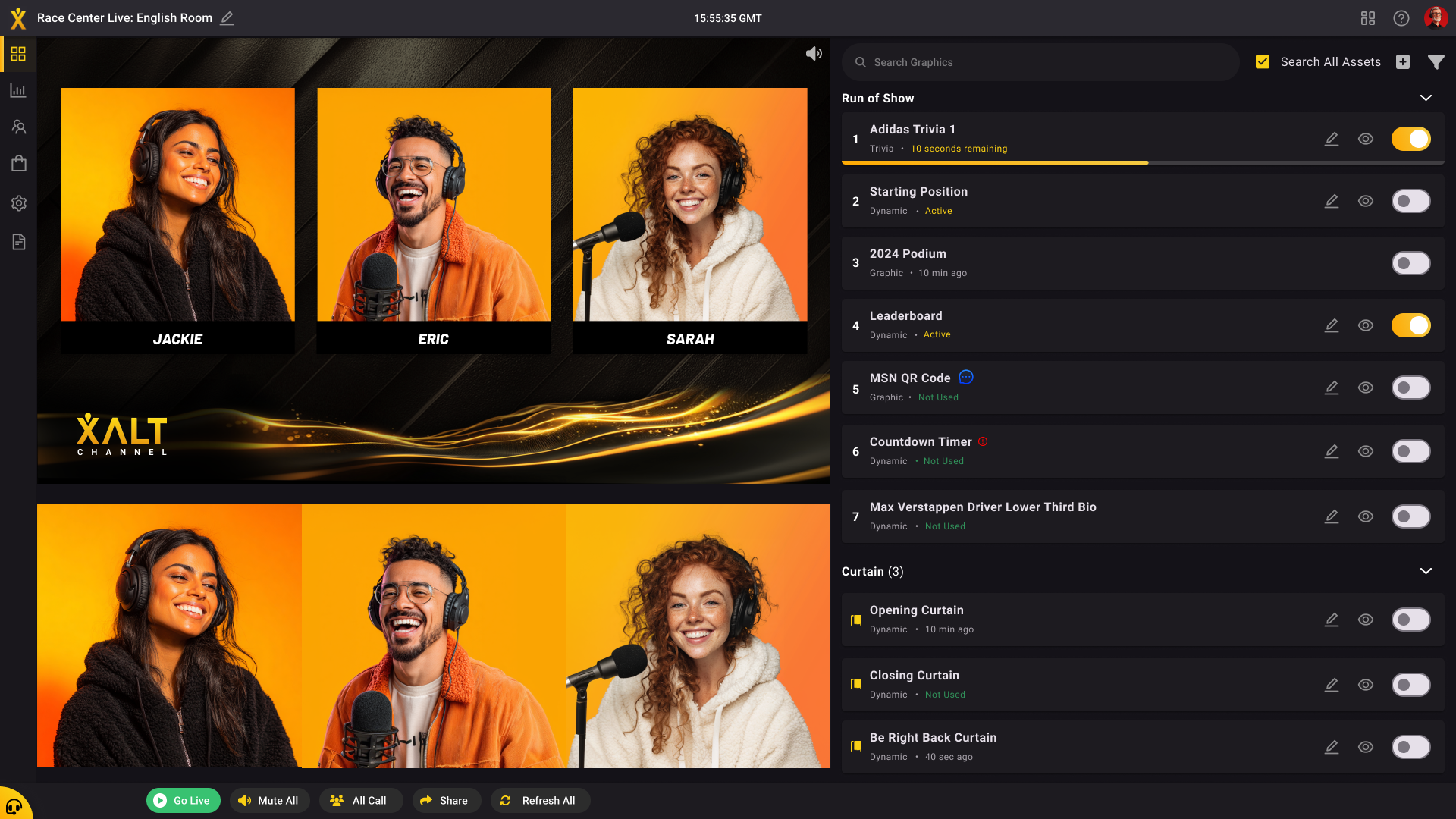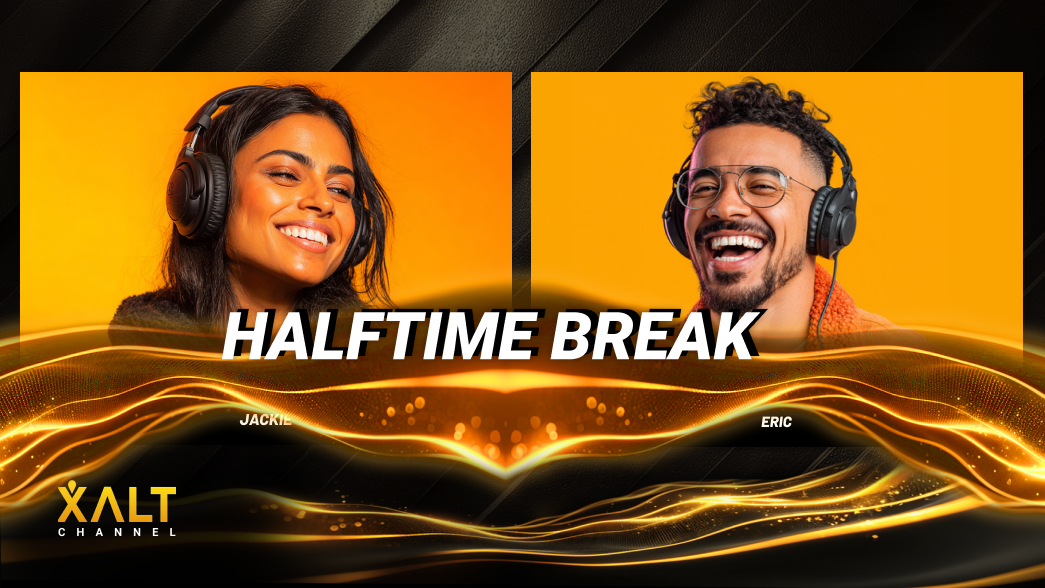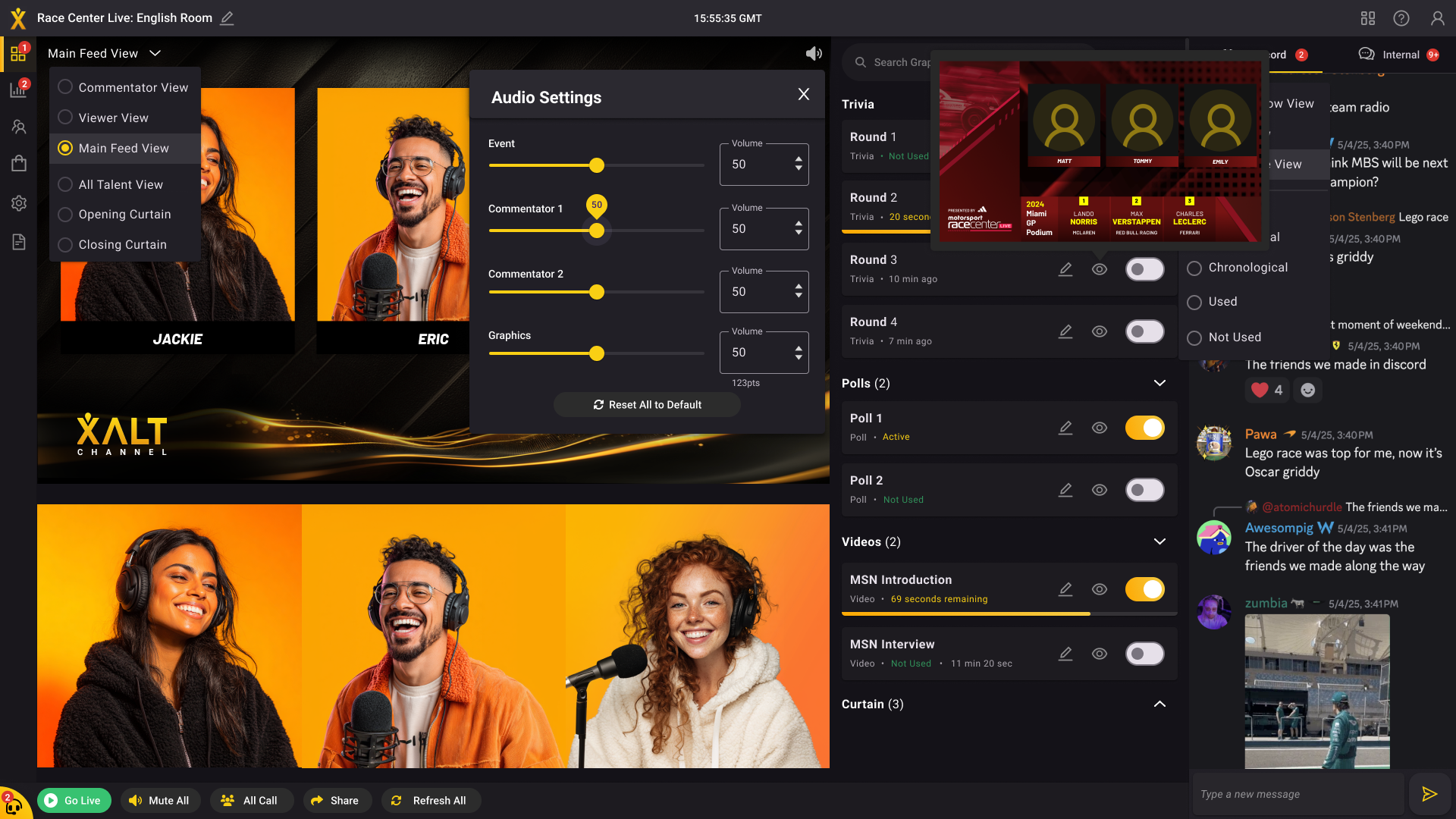
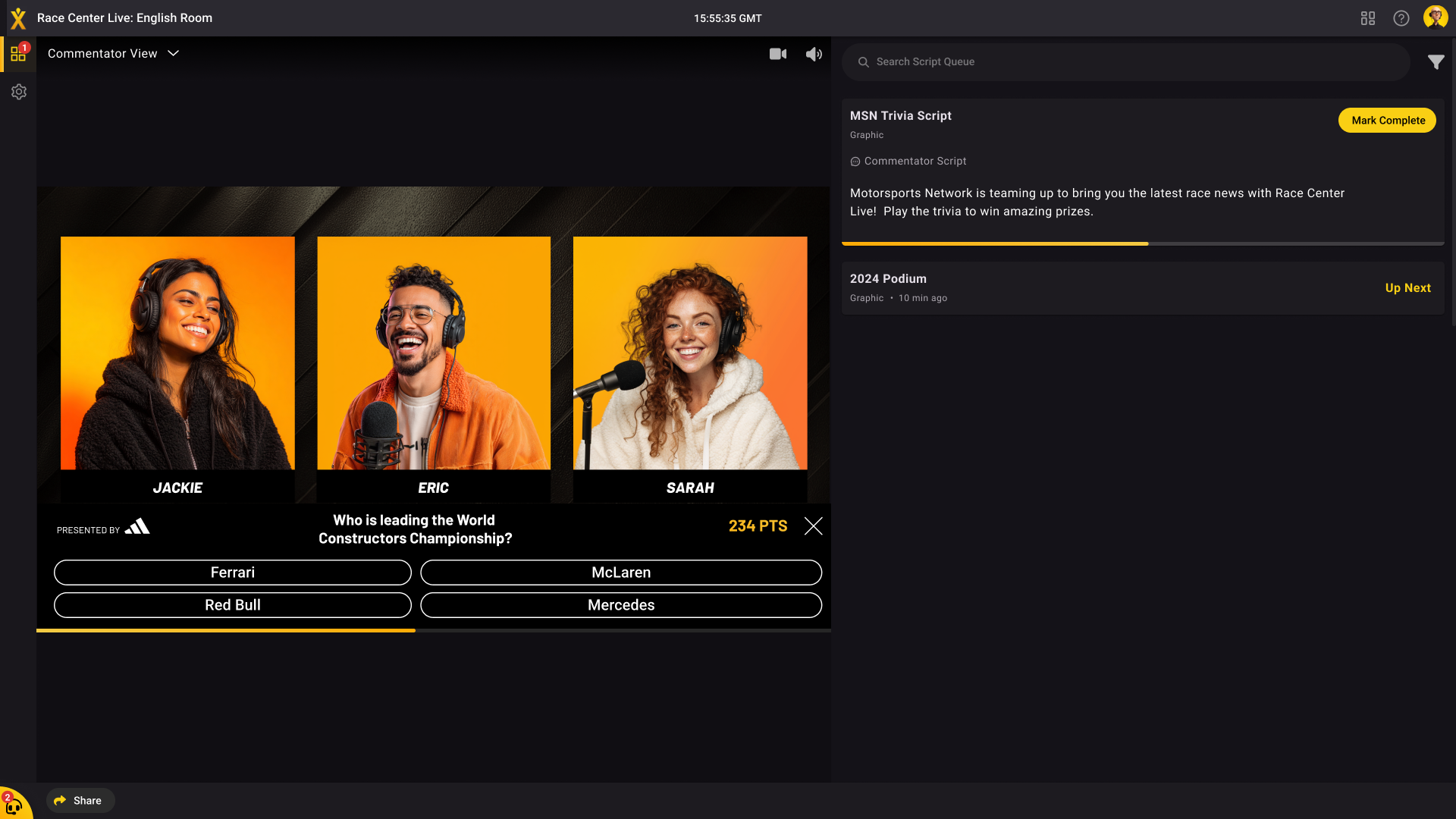
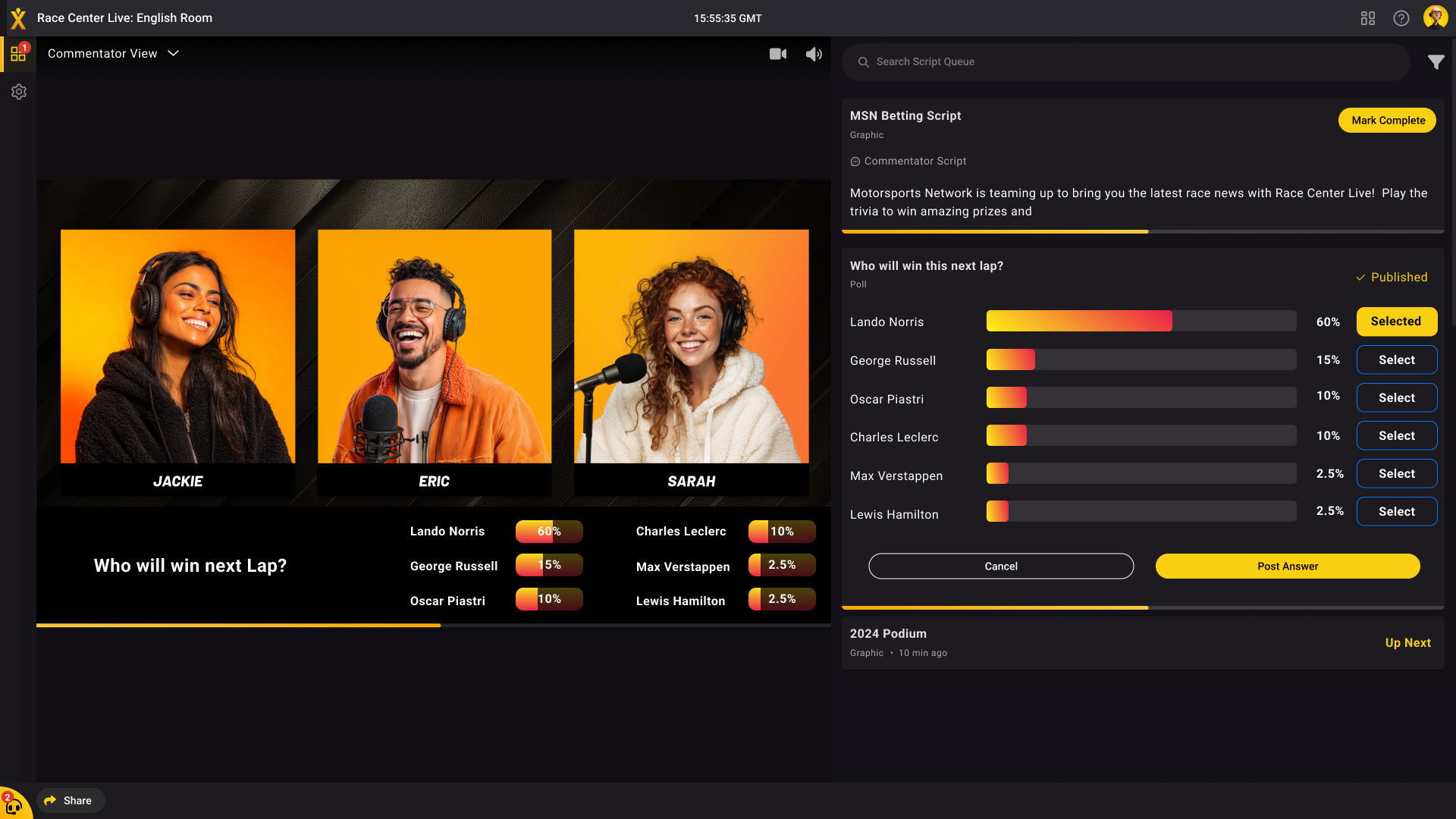
A comprehensive live broadcast production control system designed for every person in the room — from the executive producer calling the shots to the talent on camera. One configurable platform that gives each role exactly what they need, and nothing they don't.

Live sports broadcasts don't have a single operator — they have a room full of them. Producers managing the show flow. Commentators focused on their camera. Talent tracking their cues. Influencers watching their community chat. Each person has a different job, a different context, and a different definition of what "useful information" means in that moment.

XALT needed a single production control system that could serve all of them simultaneously — configurable by role, consistent in quality. My job was to design a tool flexible enough to disappear into each person's workflow while powerful enough to run a full broadcast from end to end.
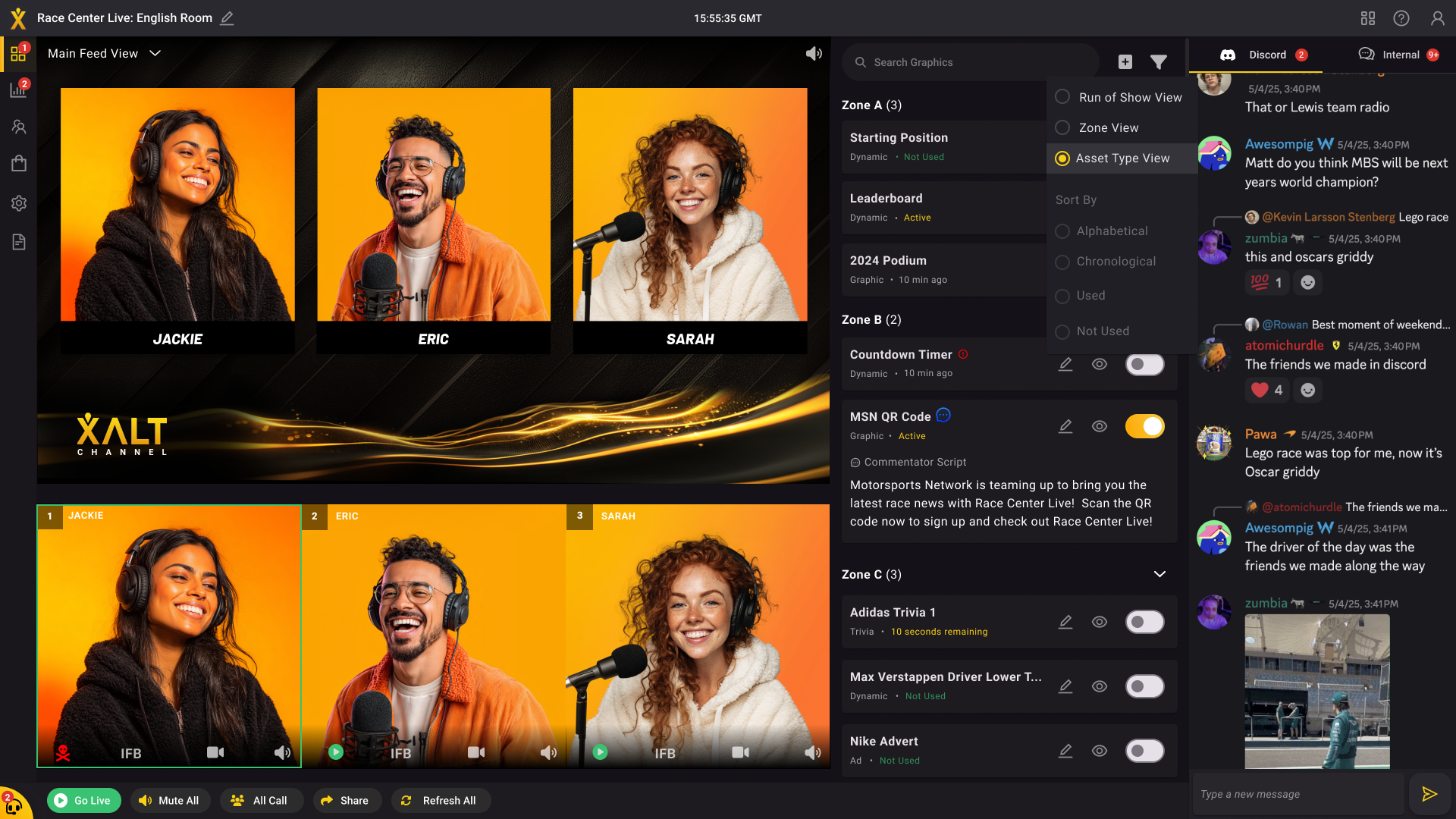
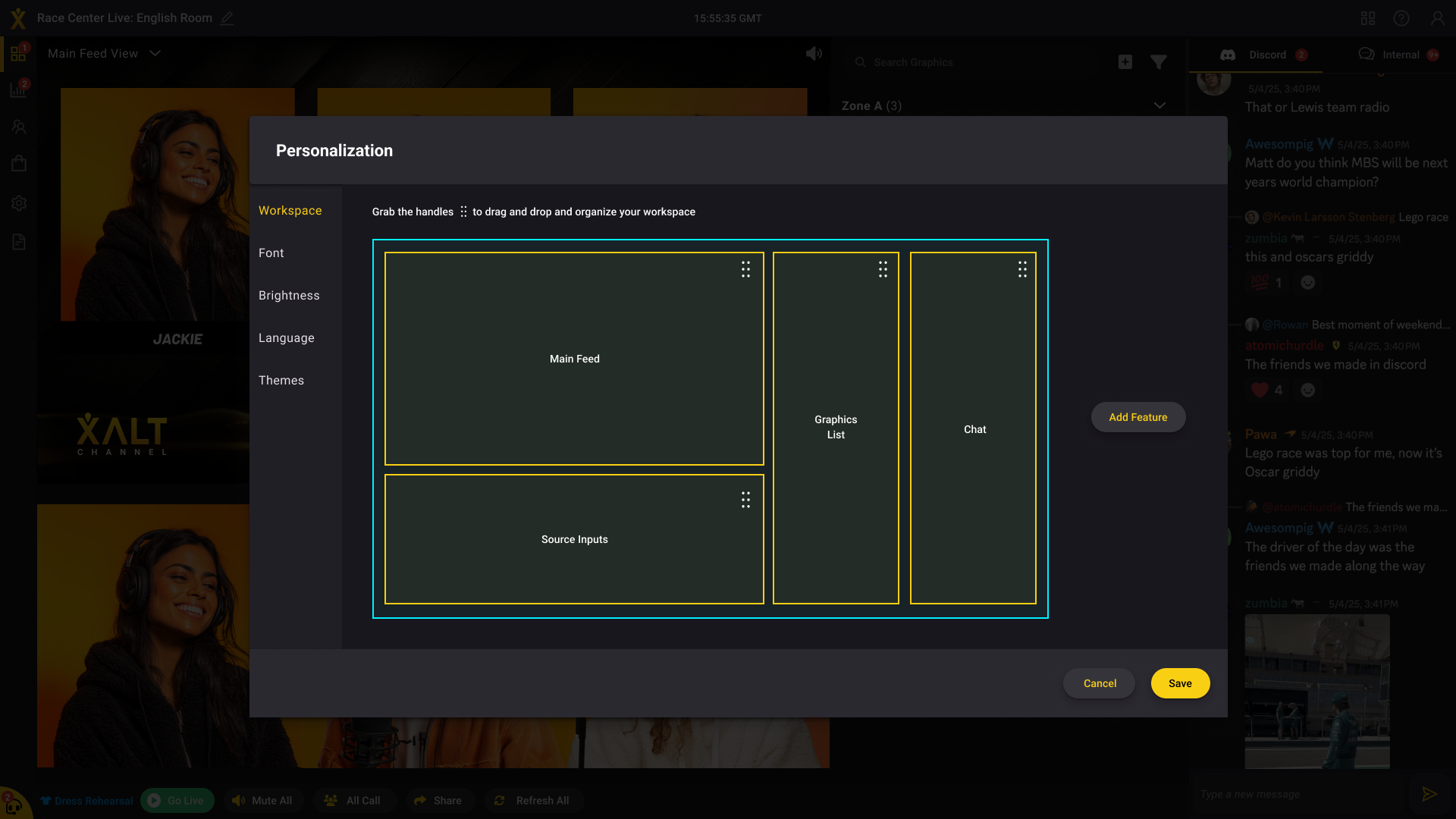
The core design challenge wasn't building features — it was building a system that could surface the right features to the right person at the right time. A producer needs the run-of-show and graphic trigger controls front and center. A commentator needs their script and incoming chat. Talent needs their cue stack and camera status. An influencer needs their community feed.
Each view is a configured window into the same underlying system. Role-based layouts mean no one is looking at controls that aren't theirs — reducing cognitive load, reducing errors, and letting every person stay in the flow of a live show without navigating around tools they don't use.


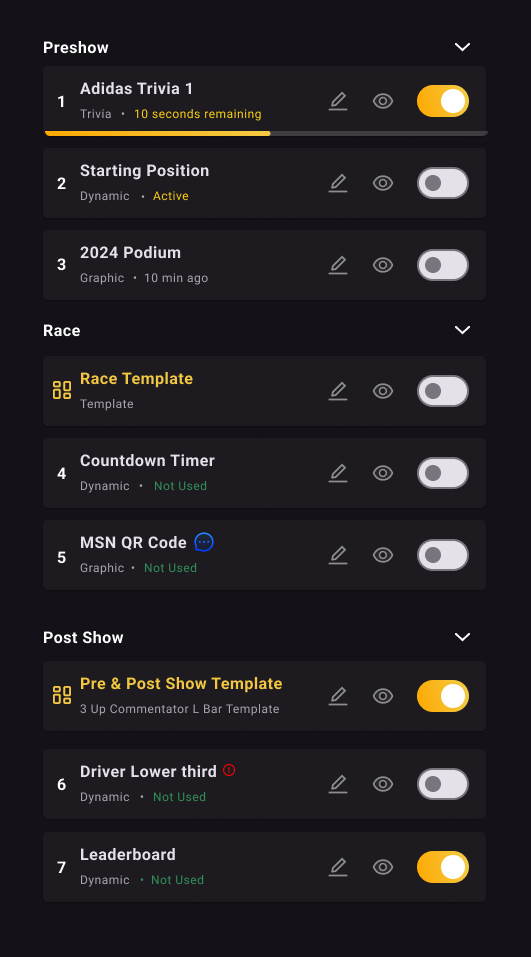
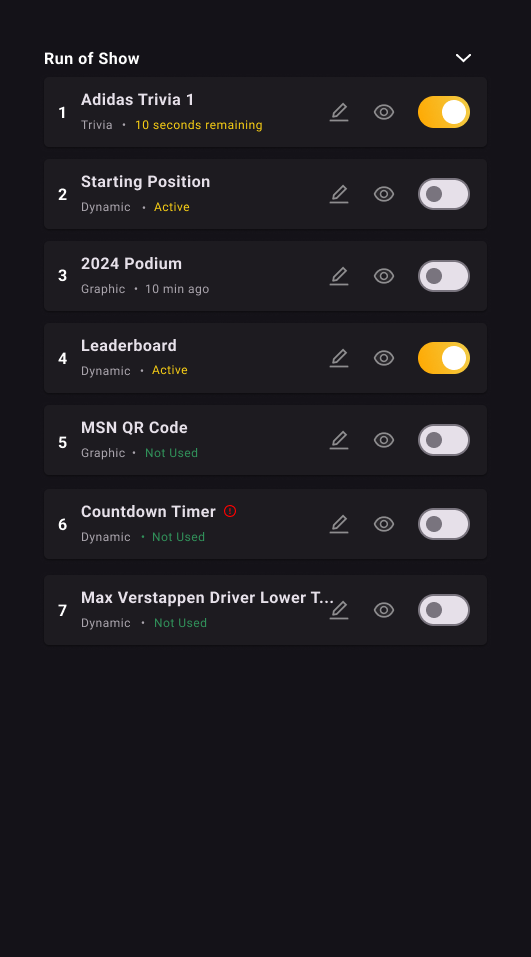
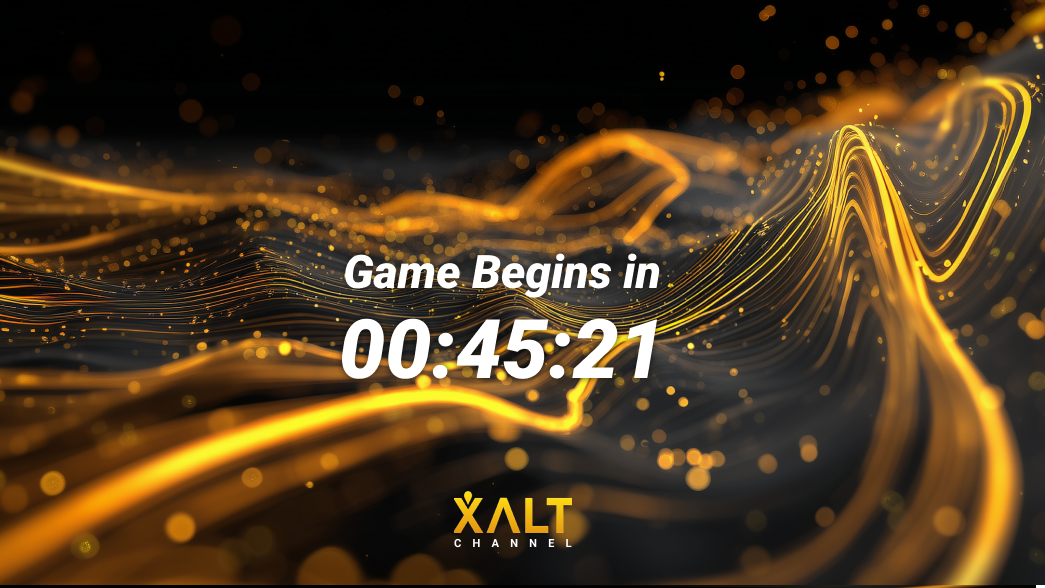
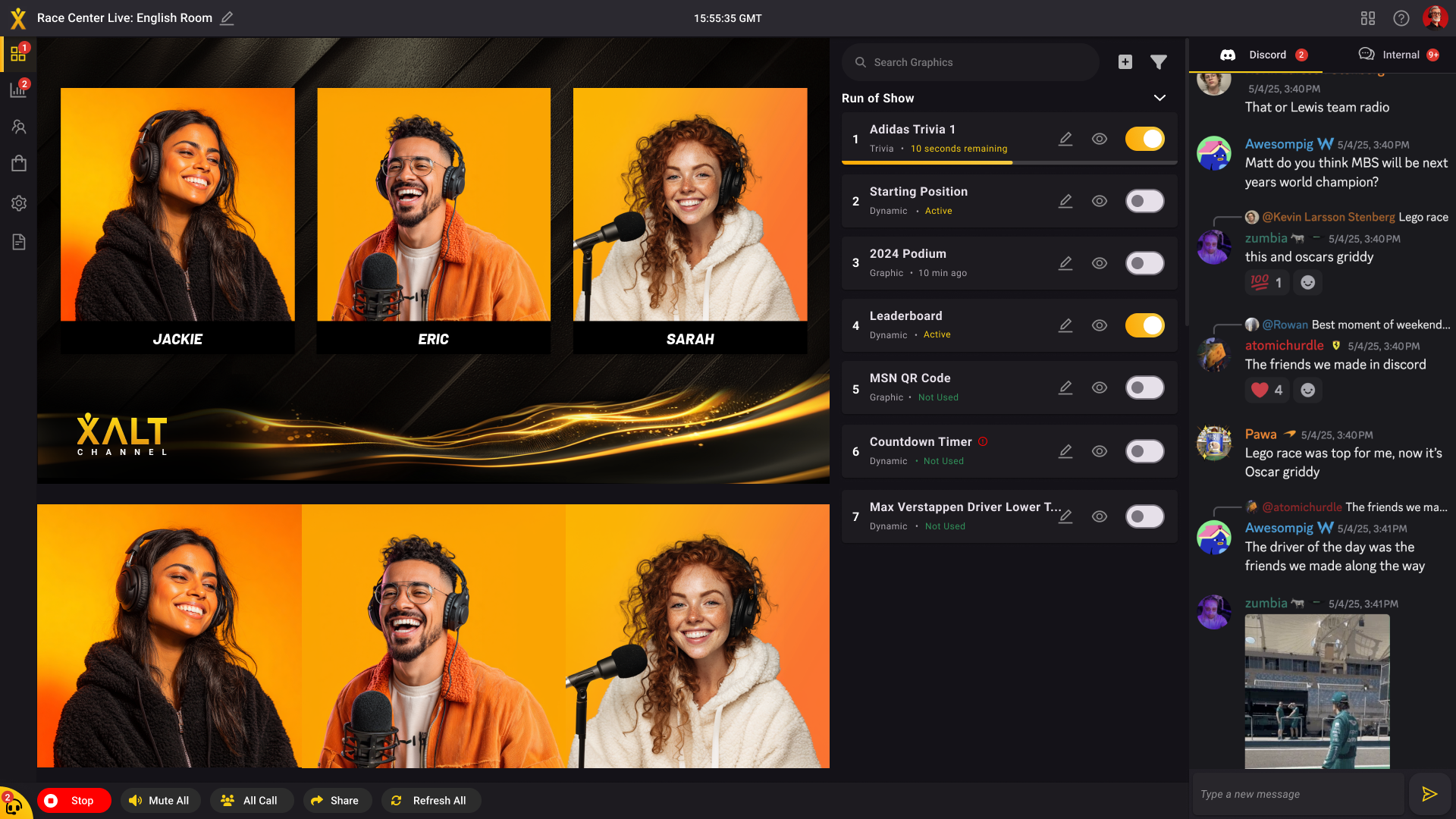
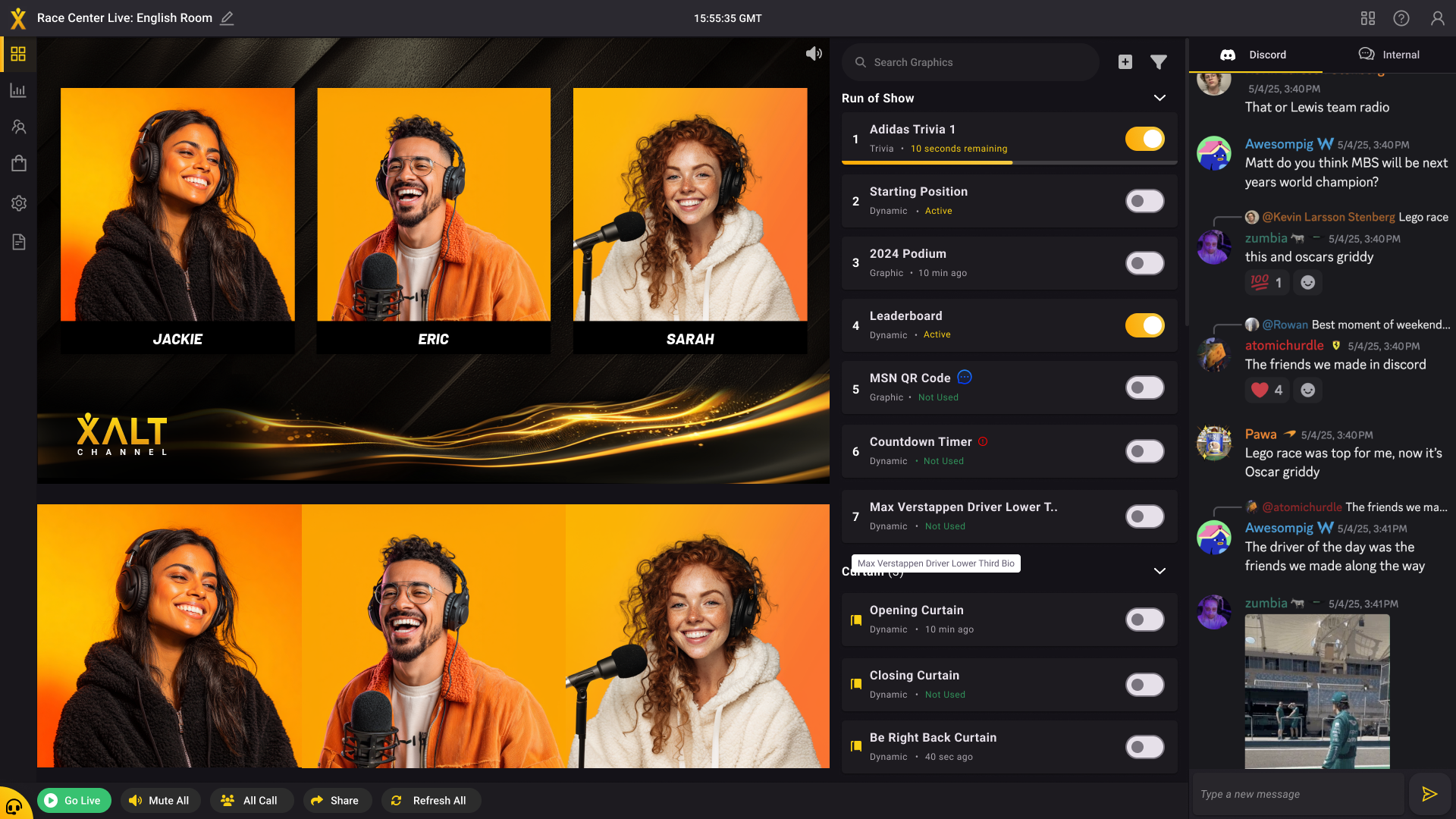
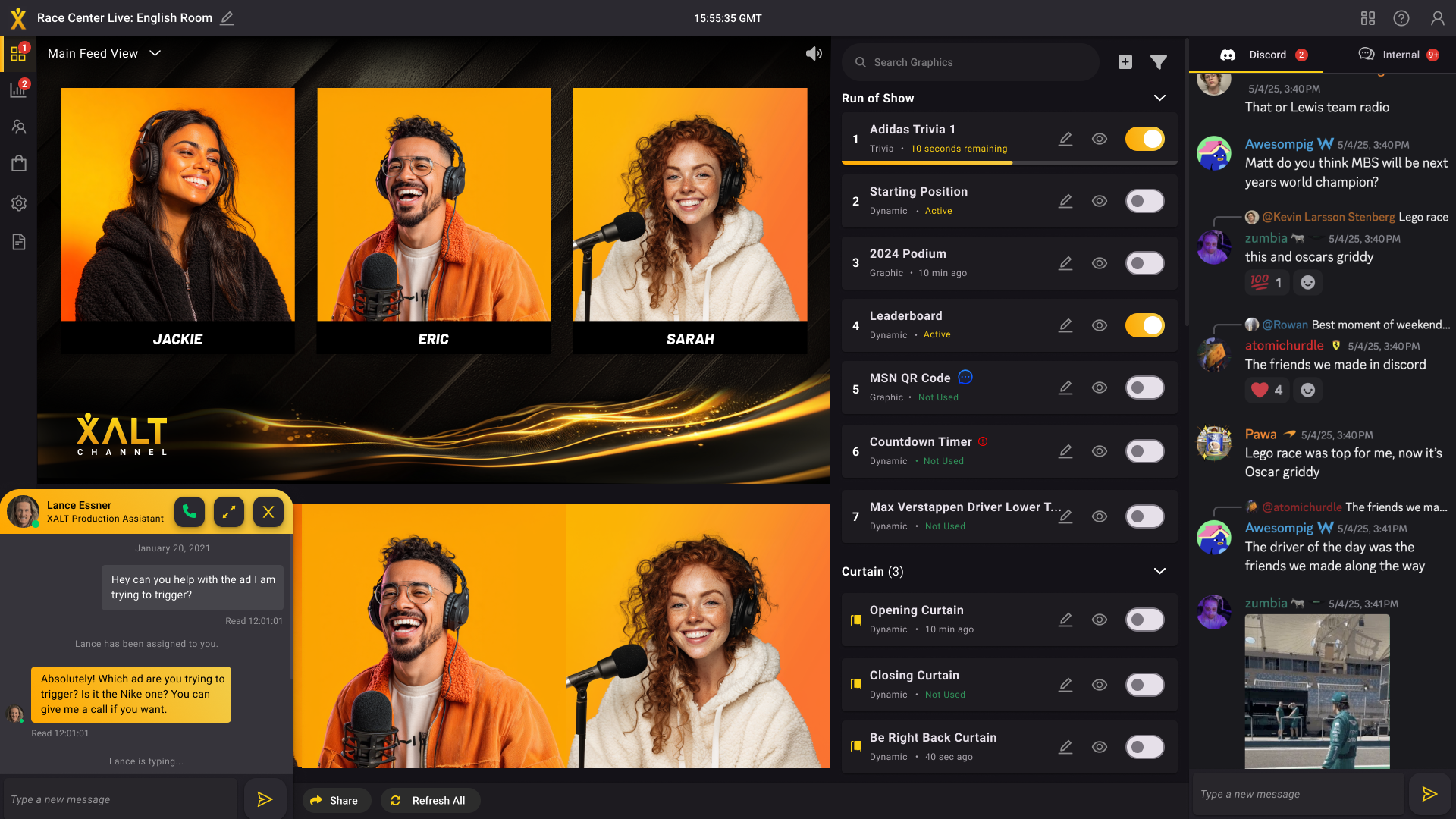
The run-of-show is the producer's command center — every segment, every asset, every cue in the order they happen. I designed the ROS view to give producers a live timeline of the broadcast: what's running now, what's coming next, and how each transition connects.
Segments can be reordered on the fly during a live show. Status indicators show which segments are complete, in progress, or pending. Asset associations let producers see which graphics, clips, and overlays are queued for each moment — so nothing gets missed when a show is moving fast.
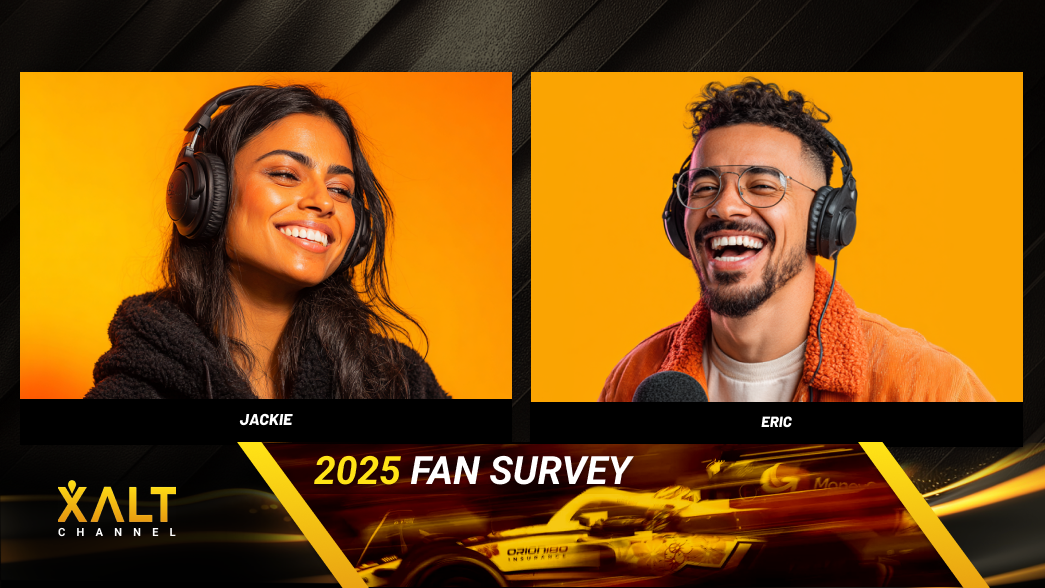
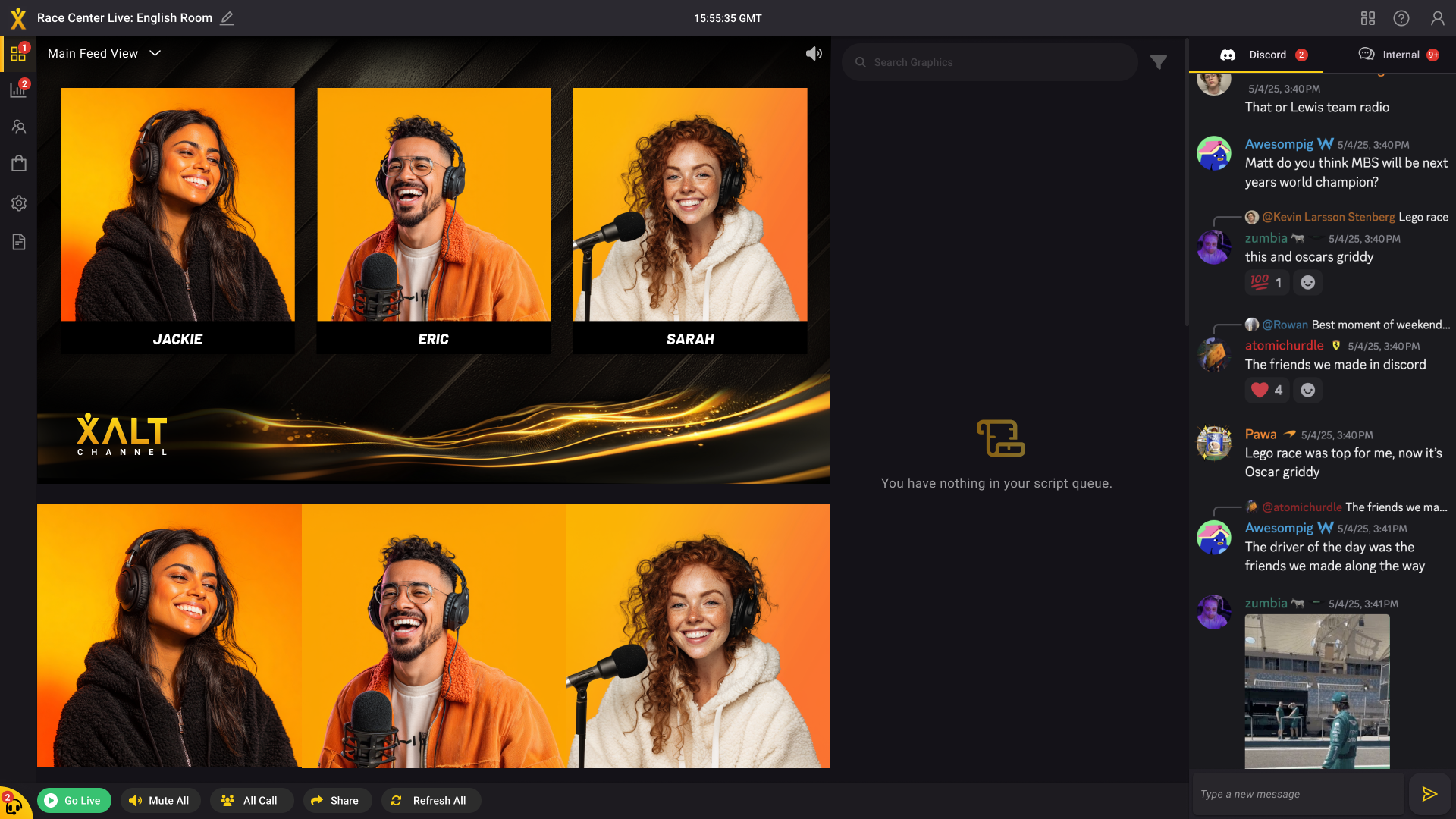
Talent and commentators are running a performance while the show runs around them. Their panel strips away everything that isn't relevant to being on screen — they see their cue stack, their upcoming segments, live chat context from their audience, and any producer notes pushed to them in real-time.
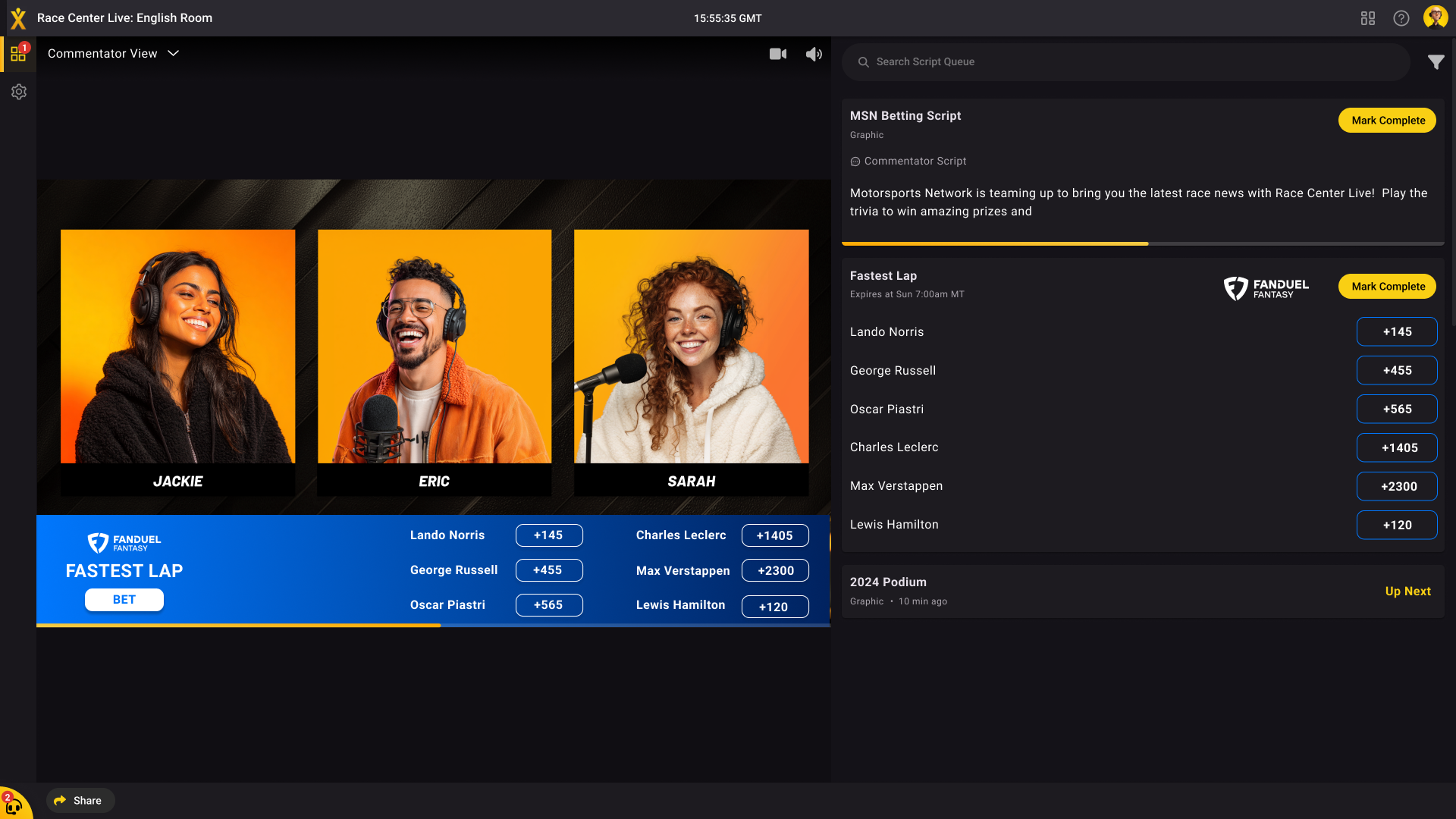
Commentators get a parallel view: their script tied to the run-of-show, incoming questions surfaced from the Discord community feed, and a clear signal for when they're live versus cut. The interface is deliberately minimal — the less they have to navigate, the more they can focus on the broadcast.


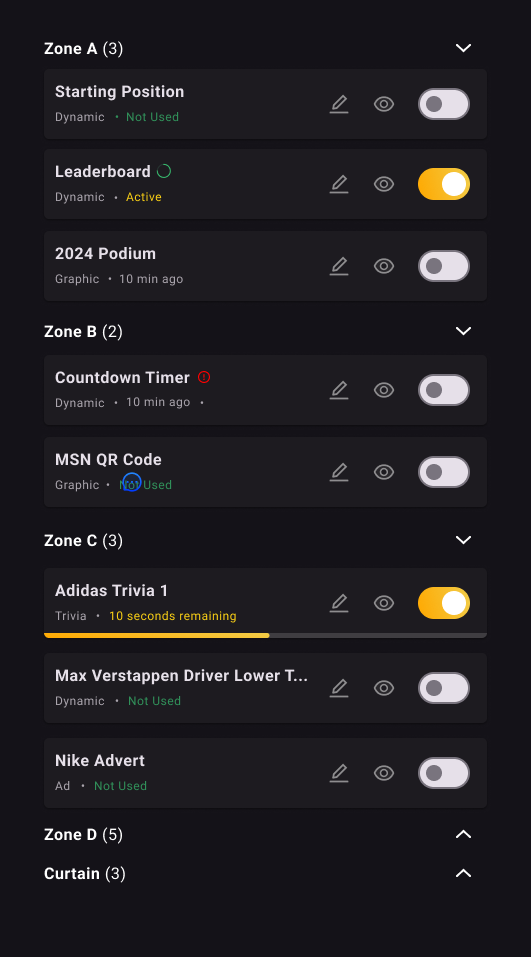
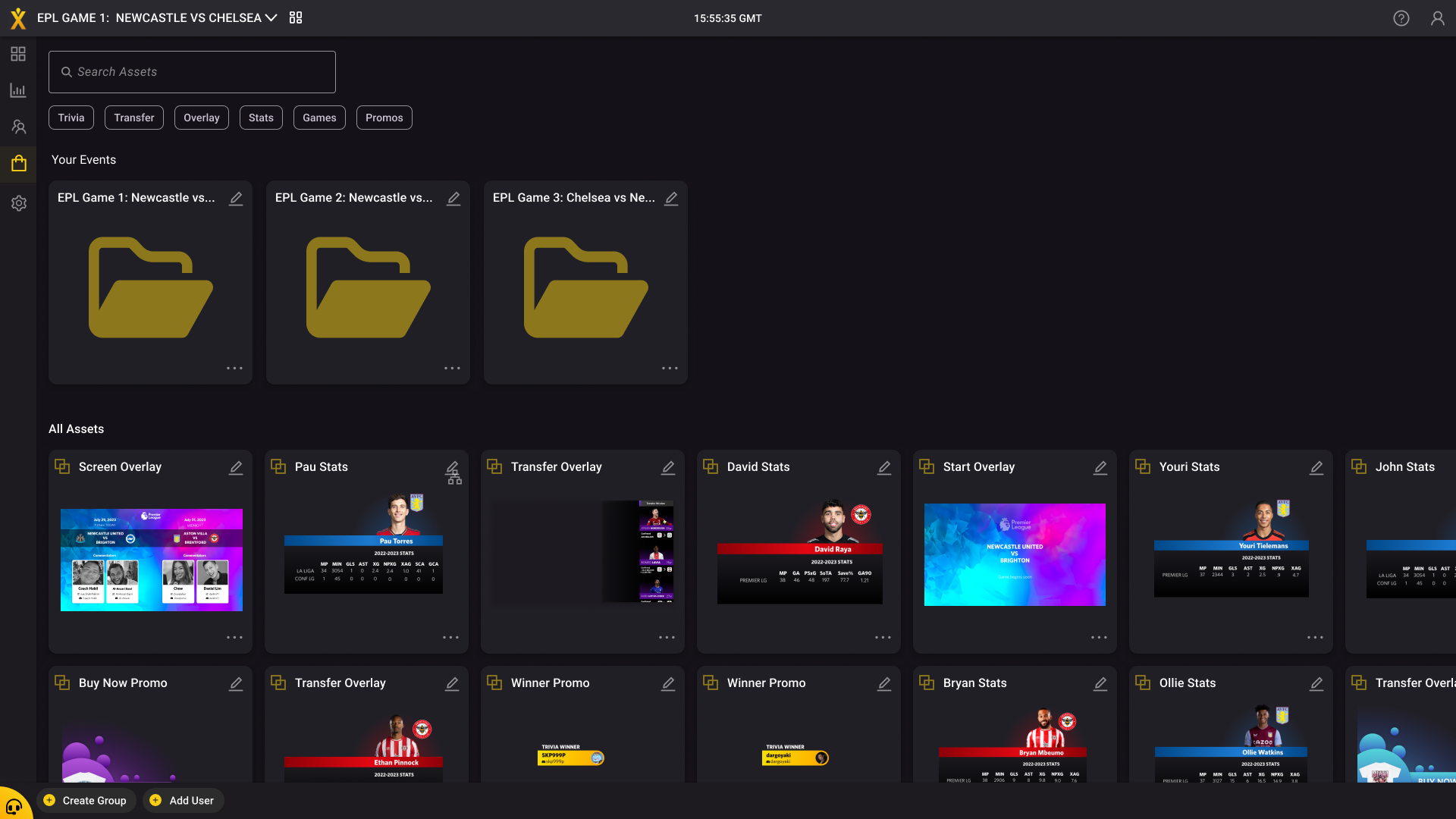
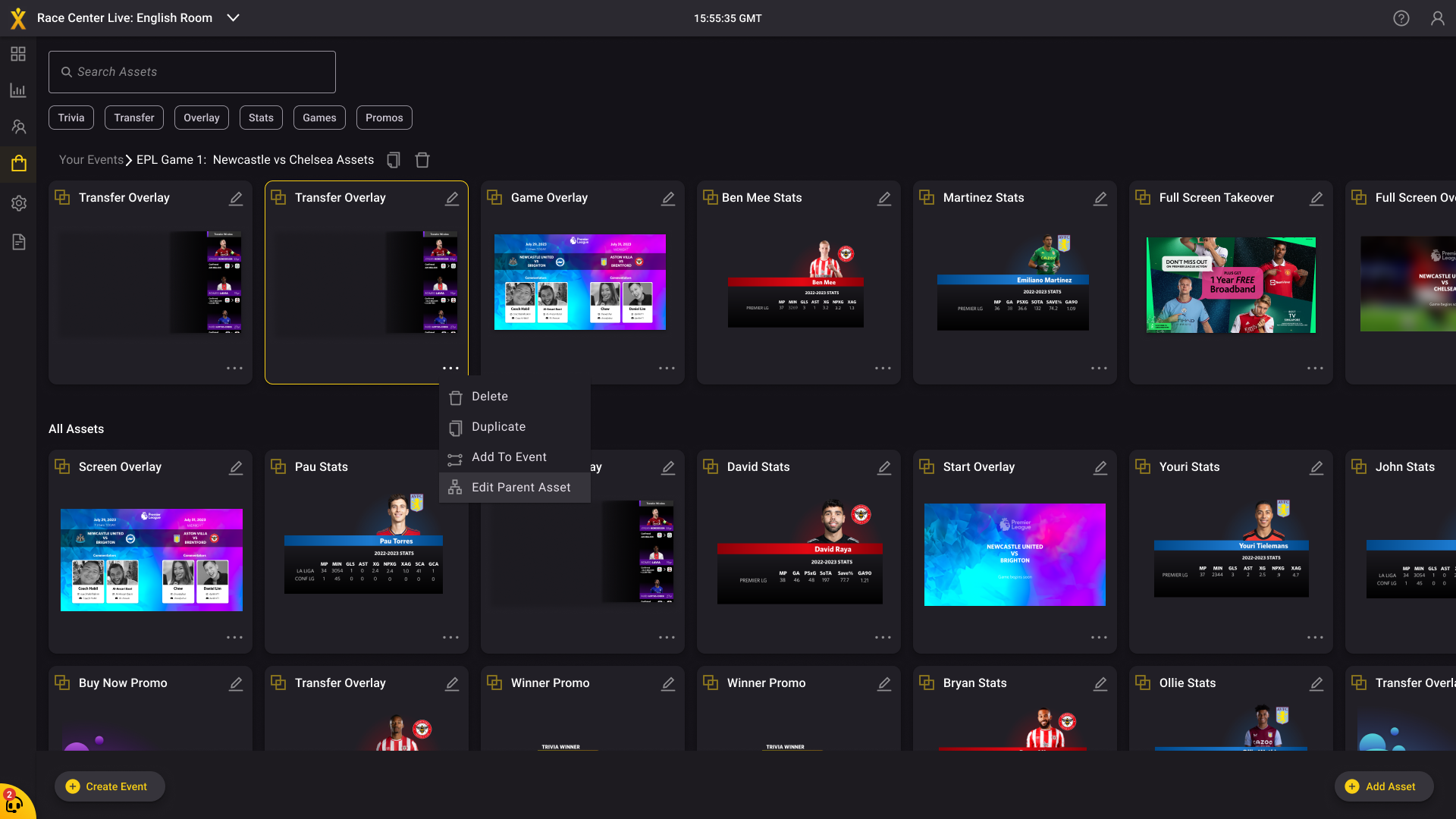
Live broadcasts are asset-heavy. Lower-thirds, sponsor cards, trivia overlays, video clips, score modules — each one needs to be findable, triggerable, and on-brand in the moment a producer calls for it. The asset library was designed as a real-time searchable system organized by type, show, and segment.
Assets connect directly to run-of-show segments, so producers can pre-stage their entire show before going live. During broadcast, one-click triggers push any asset directly to the viewer experience — no secondary system, no delay, no room for error.