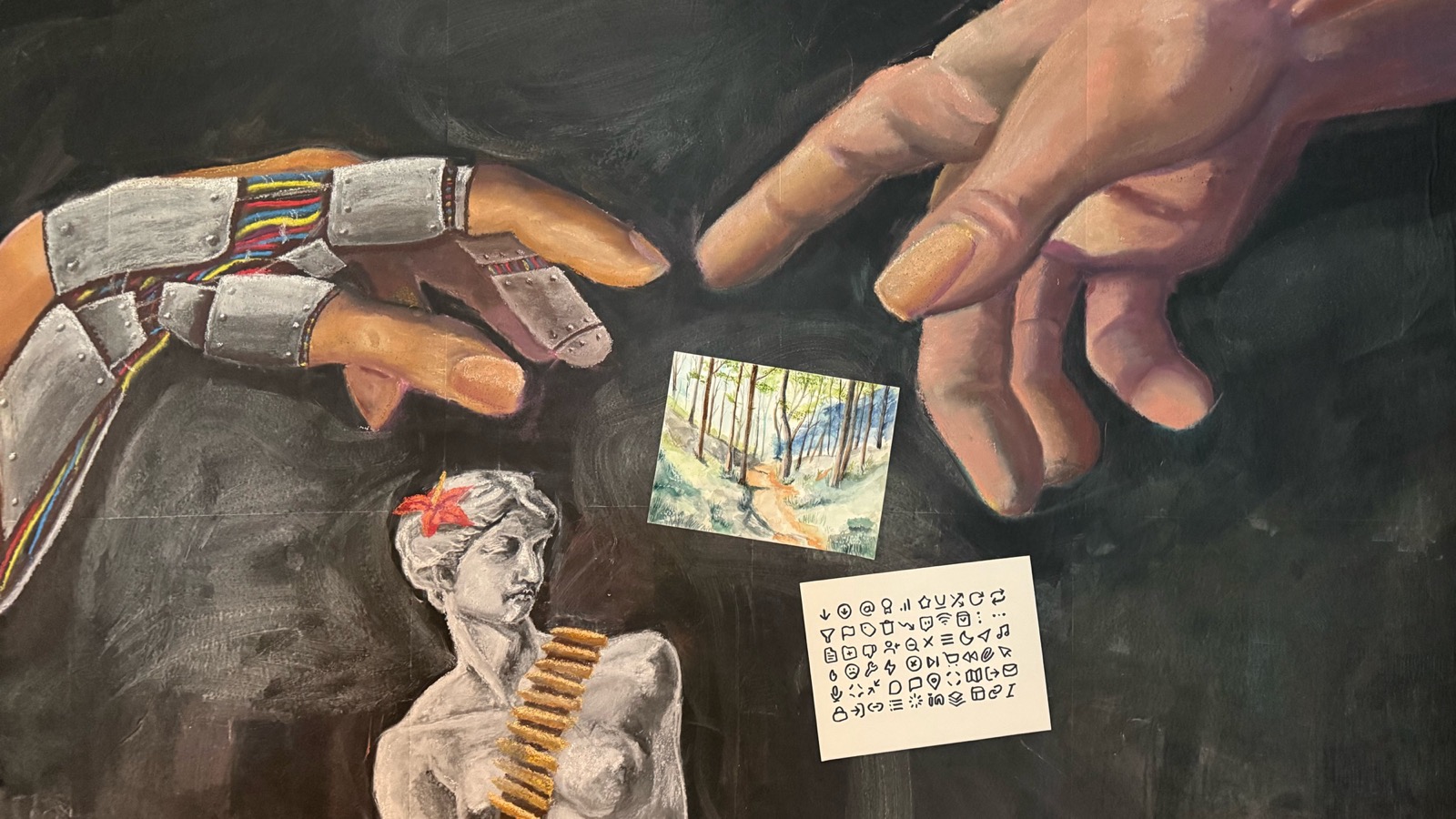
 The studio wall — one painting and one card of icons started all of it
The backgrounds on this site started with real paint on real paper — and became something more when I brought AI into the process. This is how they were made.
The studio wall — one painting and one card of icons started all of it
Before any AI touched these images, I picked up a brush. Watercolor on paper — the kind of medium that doesn't negotiate. Bob Ross said there are no mistakes, only happy little accidents, and watercolor is built entirely on that philosophy. The pigment goes where it wants. The water bleeds past where you planned. You learn to work with it, not against it. Just like AI.
Two small artifacts came off the easel: a watercolor of a forest path, and an index card of icons inked with a felt pen. The painting set the palette — the paper, the light, the mood. The card set the line: the wobble, the ink weight, the personality. Those two pieces of paper became the entire creative brief.
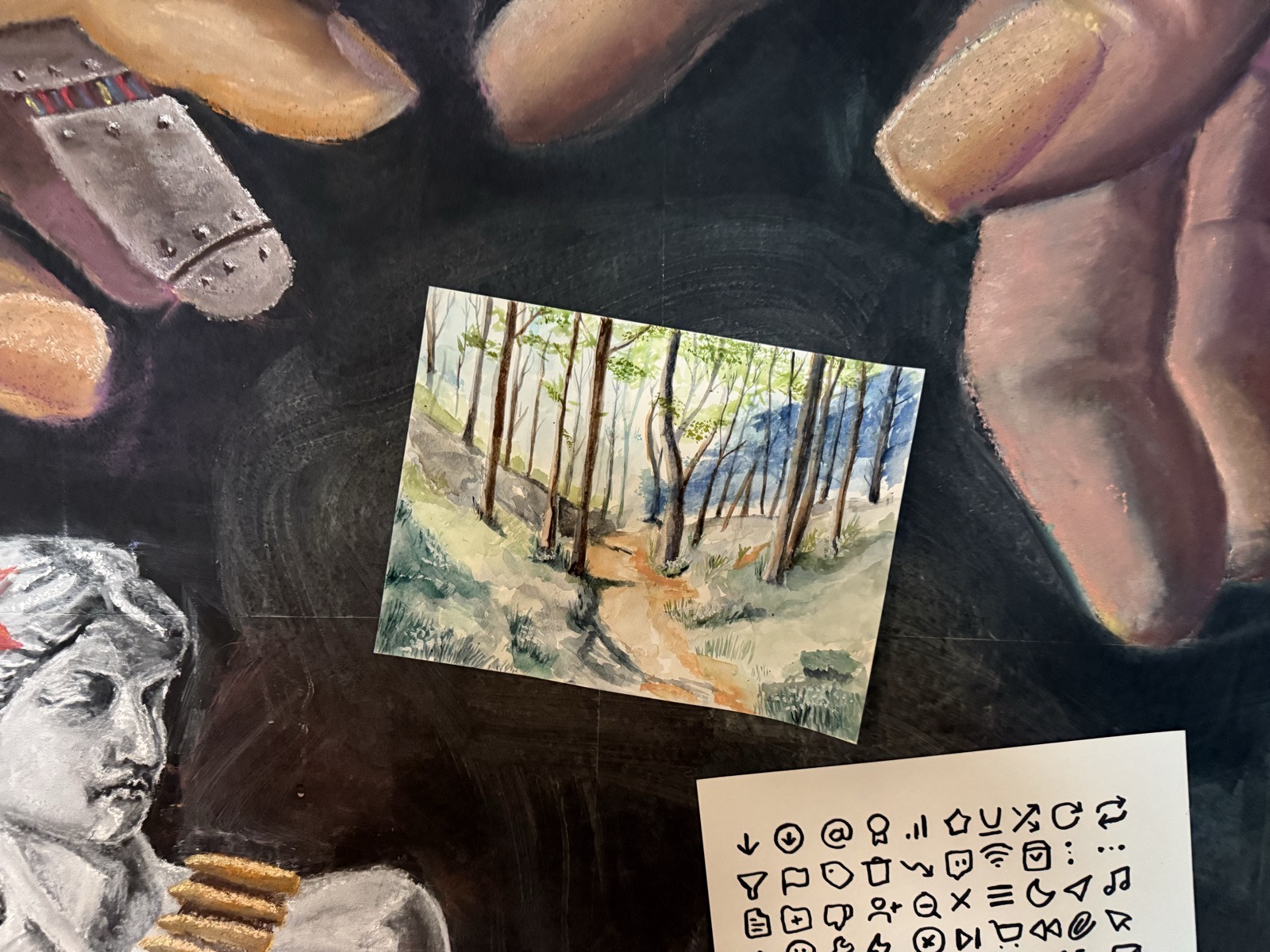 Paint to guide — the original watercolor
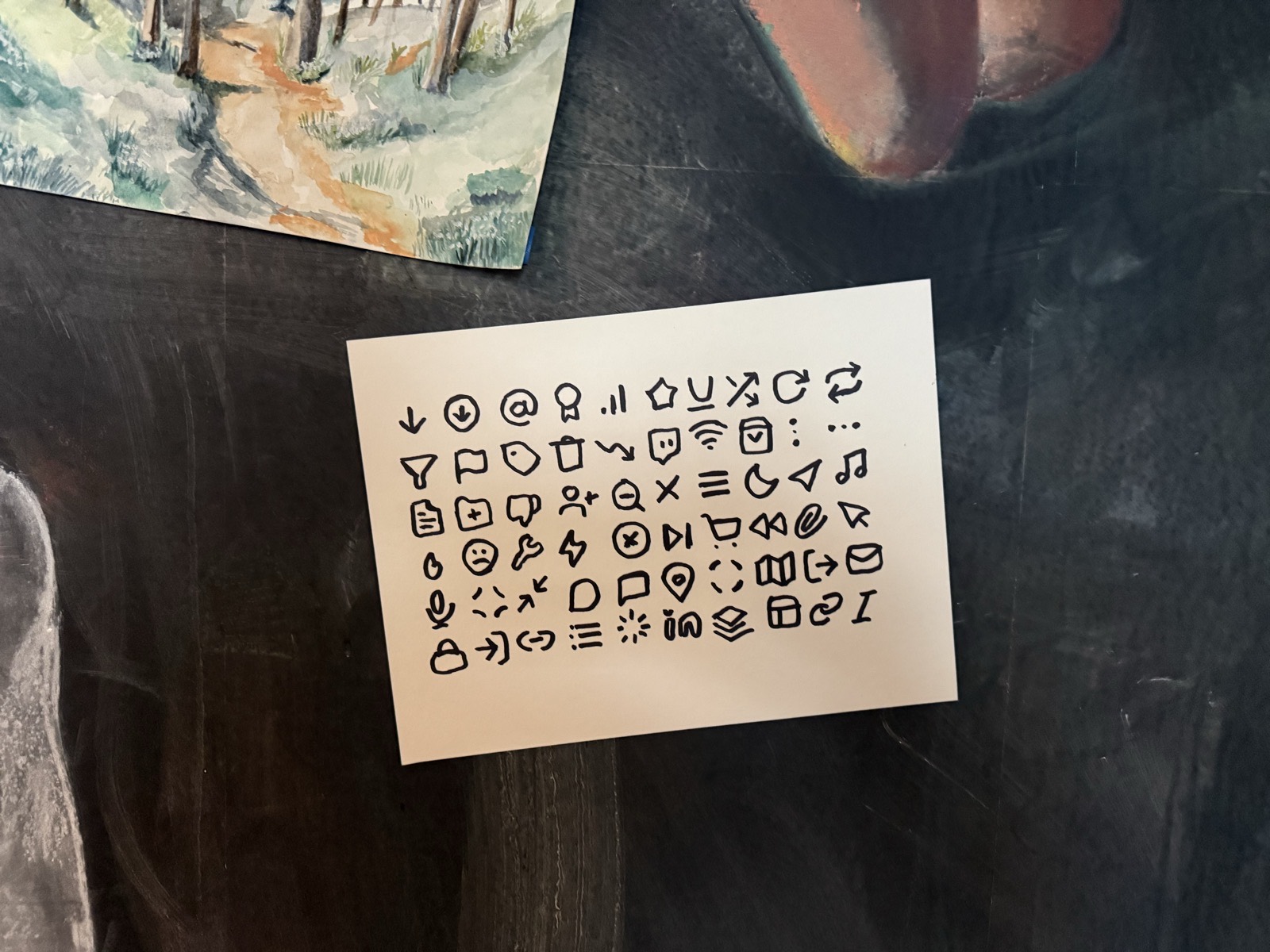 The icon card that became 288
Once the paintings existed, I brought them into a conversation with AI. I used the physical work as the creative foundation — the color, the texture, the emotional register — and used ChatGPT and Midjourney to extend and evolve what was already there. Where the originals were intimate and contained, the AI iterations opened them up into full landscapes with depth and atmosphere: four seasons of the same forest, a rain-washed morning, a burning dusk, a firefly-lit night.
The process was genuinely collaborative. I wasn't generating from nothing — I was art directing a tool that had my original intent to react to.
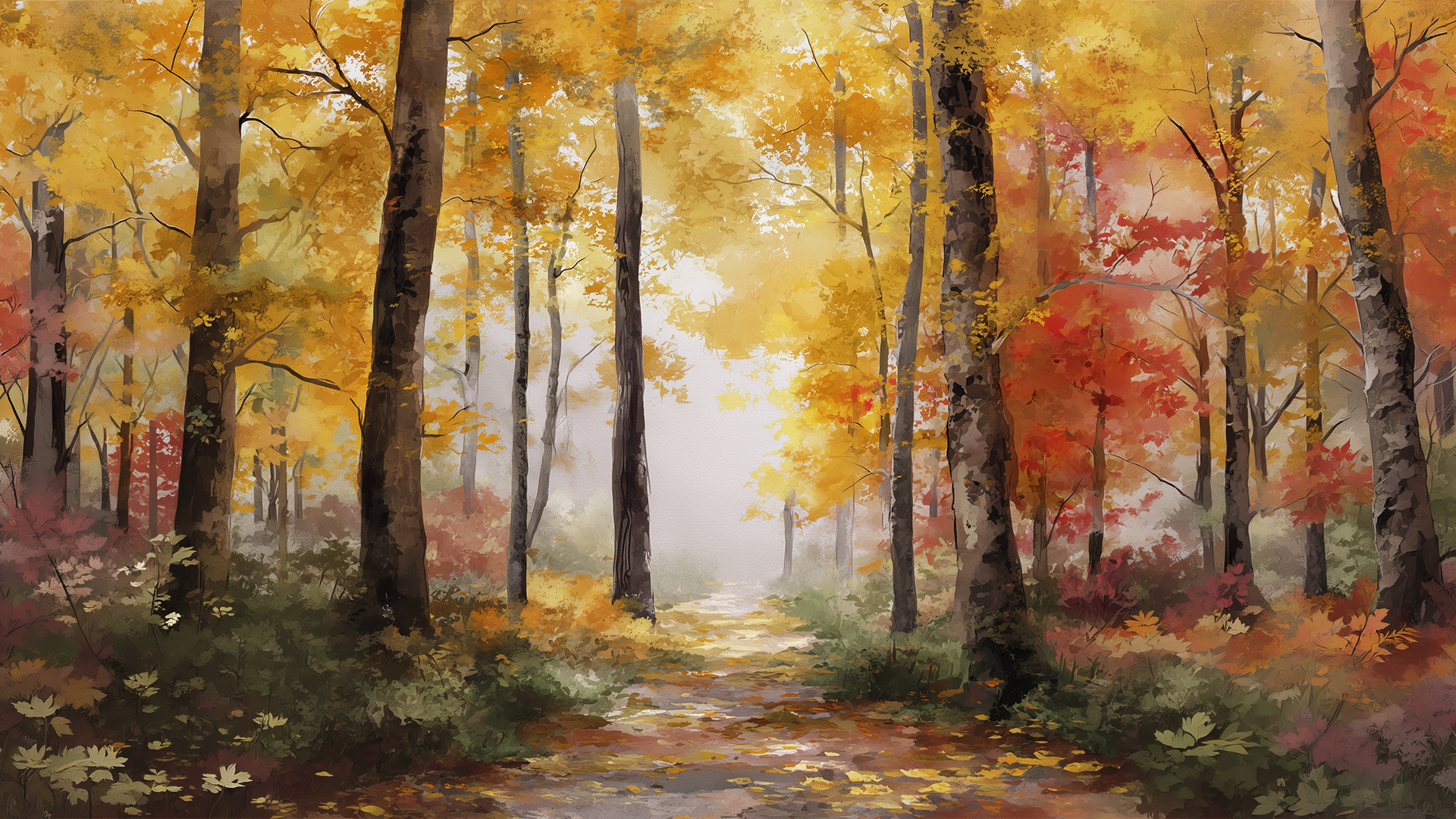 Autumn
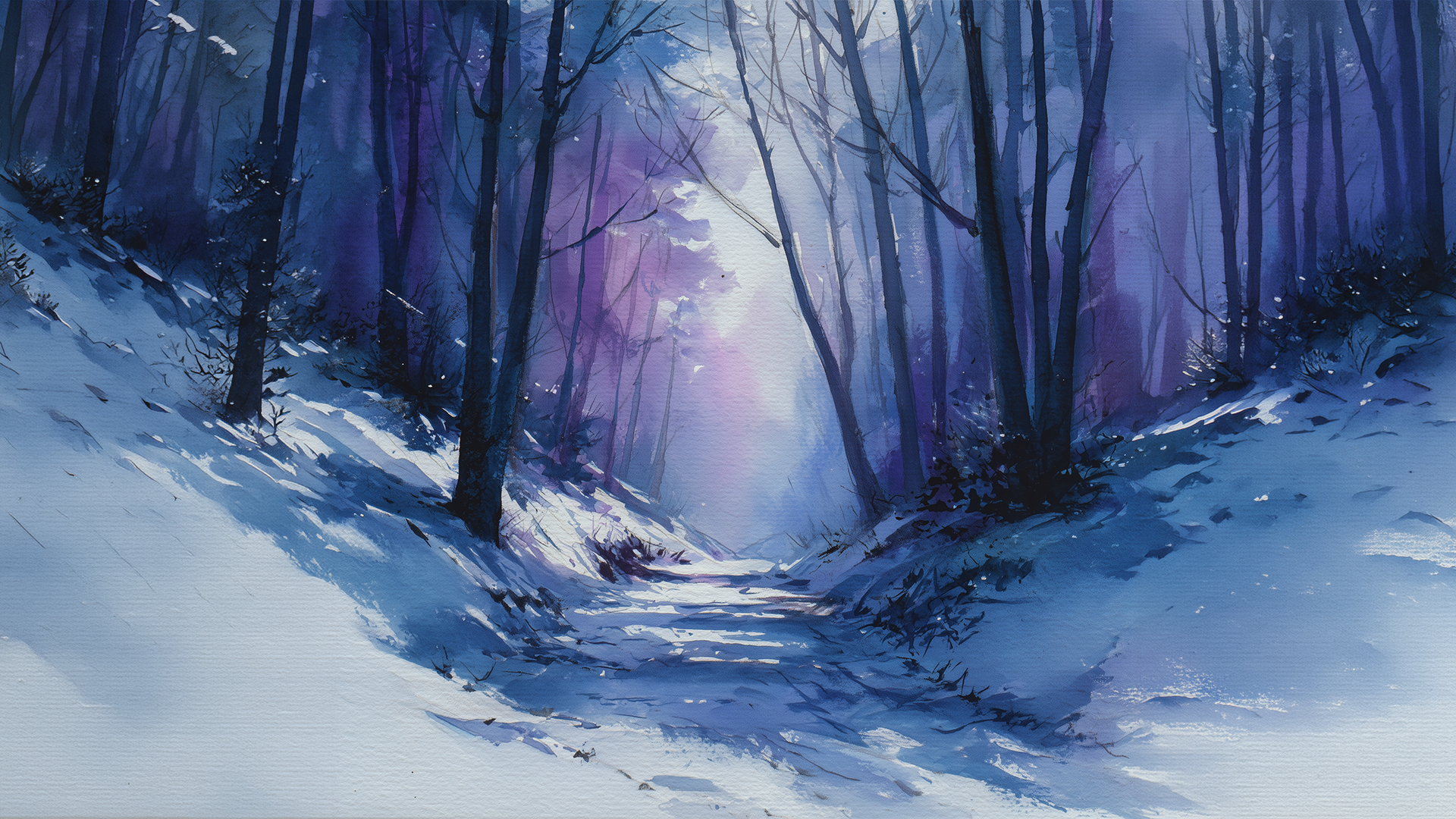 Winter
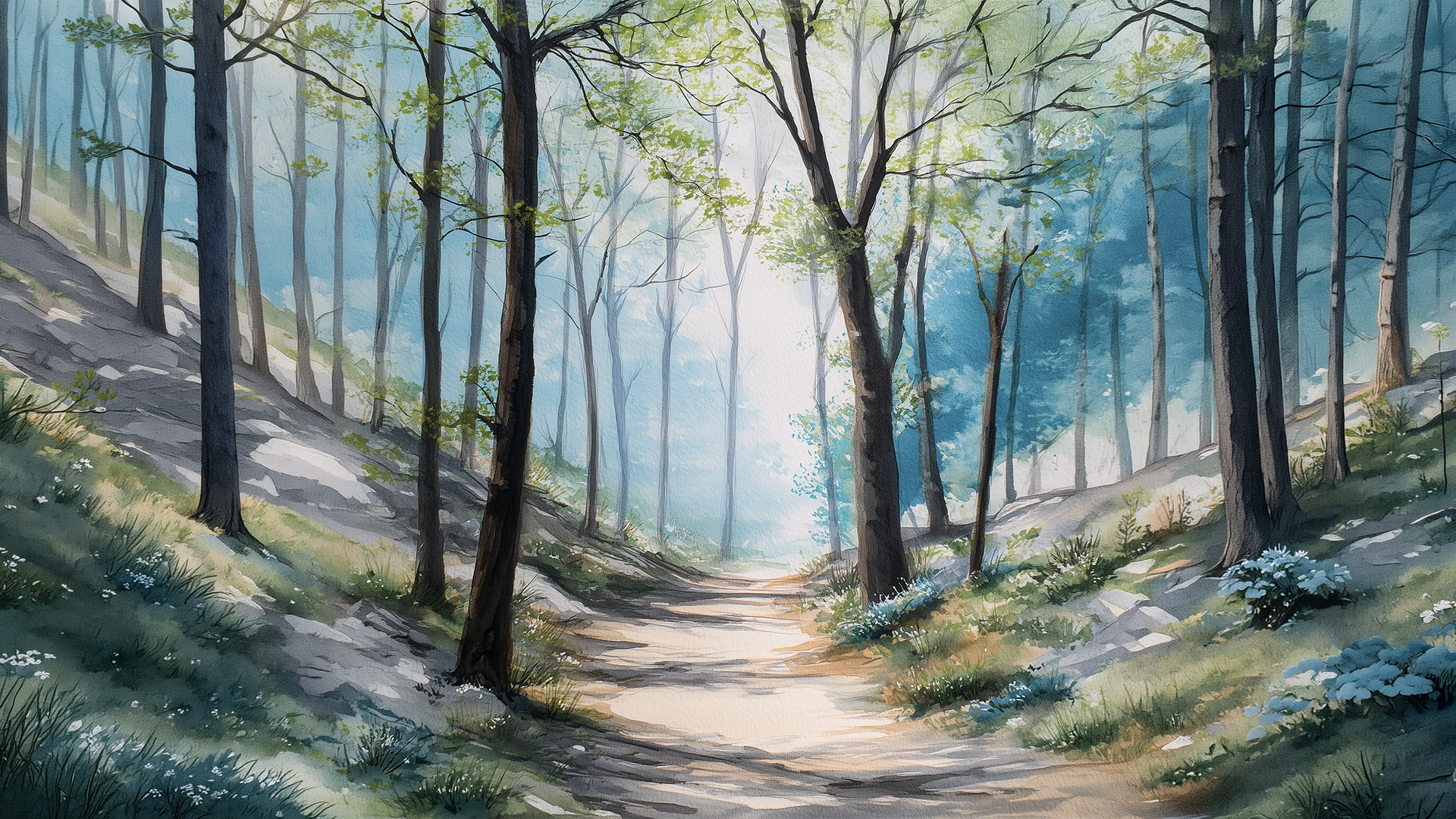 Spring
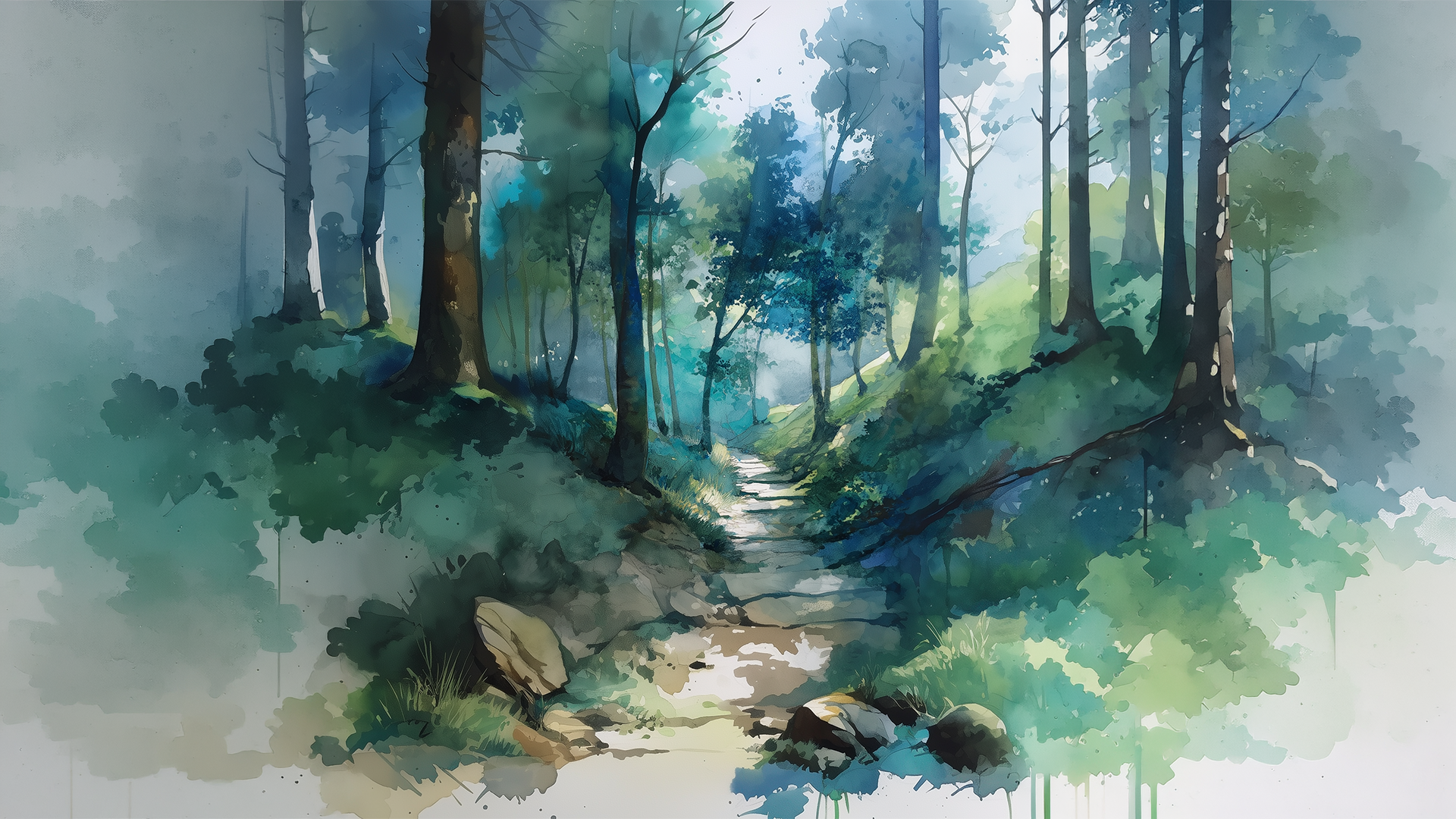 Summer
From there, Google Gemini's video generation tools gave the final images motion — wind in the leaves, light shifting across snow, the barely-perceptible drift of a summer haze. The result is what you see as you scroll through this site: paintings that breathe.
The same pipeline then built a design system. Claude studied the inked strokes on that little card and re-drew them as 288 felt-pen icons — same wobble, same weight, every arrow and bell and calendar an heir of the original. The theme paintings became four coordinated moods, and Claude Code assembled all of it into Inkwash — 64 components, four painterly themes, one stylesheet.
Paint to guide. AI to scale.
This is the part that's genuinely new. A bespoke component library — custom illustration, custom iconography, coherent theming — used to take a design team the better part of a quarter. With one painting to guide it and a stack of AI collaborators to scale it, one designer built this one in days. Not generic, not off the shelf — nuanced, personal, and fast.
 The same system, on fire
 …and after dark
The AI had something to react to. It wasn't generating from nothing — it was extending a human intention, a set of choices that were already made with care. That distinction matters. The craft isn't in the tool. It's in what you bring to the tool. The physical painting set the creative brief that every subsequent step had to honor.
This is what I believe about AI: the people who will do the most interesting work with it are the ones who arrive with something already in their hands. Taste, intention, and point of view are still entirely human.
AI doesn't have to replace us. It can help us go further than we ever thought humanly possible.